
Best Vacation Rental Income Properties: Where to Buy in 2026
Buying a vacation rental is no longer a side hobby for people with a spare cabin. It is a full asset class, and the best vacation rental income properties now cluster in a handful of markets where nightly rates, occupancy, and year-round demand line up in a way they rarely did before. The catch: a market that cash-flowed in 2021 often does not in 2026, because “buy where you like to vacation” stopped being a strategy the moment mortgage rates crossed 6%.
This guide breaks down what actually makes a property earn, which cities are delivering right now, and how to avoid buying a money pit with a nice view. It is grounded in real cap-rate and occupancy figures, not brochure math.
What Makes a Vacation Rental Actually Profitable
The mistake most first-time buyers make is judging a property by its gross nightly rate. A $400-a-night condo in a ski town sounds great until you subtract property management, cleaning, HOA fees, utilities, insurance, and the month of April when nobody books. What matters is net revenue after every fixed cost, measured against what you paid.
A rental that produces $30,000 in annual net income on a $400,000 purchase is making you exactly as much as a $45,000-net property on a $600,000 purchase. Cheap sticker prices do not equal good deals. Here are the four numbers you should learn before looking at a single listing:
- Cap rate — annual net operating income divided by purchase price. Most vacation rental pros aim for 6% to 9%; anything under 5% usually only works if you expect strong appreciation.
- Occupancy — the share of nights booked per year. Coastal markets with a real off-season might run 45% to 60%; mountain resorts and Sun Belt markets can hit 65% to 75%.
- Average daily rate (ADR) — what you actually collect per booked night after platform fees, not the list price you see on Airbnb.
- Regulation risk — the single biggest killer of vacation rental returns. A city council vote can cut your occupancy from 75% to zero in one meeting.
You need all four, because they trade against each other. High ADR markets usually have low occupancy; cheap markets usually have thin margins and heavy competition.
The Best Vacation Rental Income Property Markets in 2026
Data from vacation-rental analyzers like AirDNA consistently shows the same pattern: the strongest returns are no longer in the headline destinations (Maui, Aspen, the Hamptons), but in second-tier markets where prices are still reasonable relative to what travelers will pay per night.
Here is a comparison of the market types currently producing the best numbers:
| Factor | Mountain Resort Towns | Gulf/Sun Belt Beach Towns | Midwestern Lake Country |
|---|---|---|---|
| Typical cap rate | 5%–7% | 6%–9% | 7%–10% |
| Occupancy | 55%–70% (seasonal) | 50%–60% (seasonal) | 45%–60% (heavily seasonal) |
| Entry price (2–3 BR) | $450k–$900k | $300k–$650k | $200k–$450k |
| Regulation risk | Moderate to high | Moderate | Generally low |
| Best for | Ski + summer dual season | Steady warm-weather demand | Cash-flow-first buyers |
Gulf and Sun Belt Beach Towns
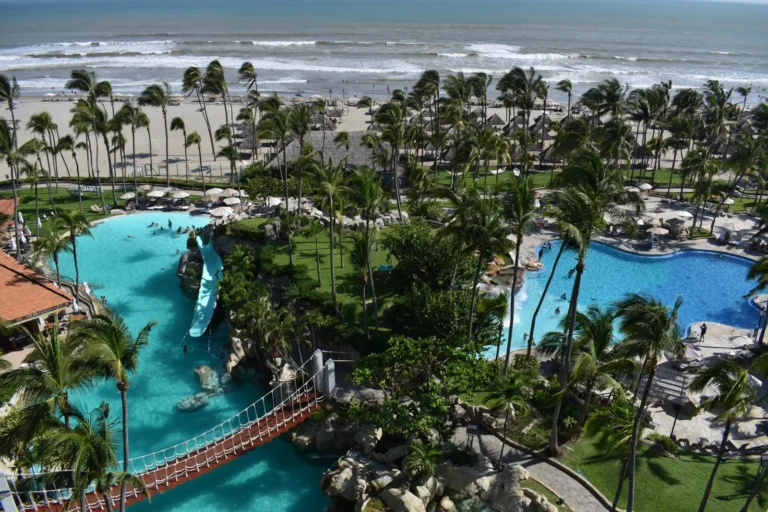
The Gulf Coast of Florida and the Alabama shore remain the most reliable cash-flow markets in the country right now. Places like Gulf Shores, Orange Beach, and the stretch of the Florida Panhandle between Destin and Panama City Beach combine three things that are hard to find together: sub-$600,000 entry prices for a waterfront or near-waterfront home, a warm-weather season that runs roughly March to October, and high-volume tourism that keeps occupancy above 50% even in shoulder months.
Gulf Shores, Alabama specifically posts some of the fastest-growing travel demand figures nationwide, driven by drive-in vacationers from Atlanta, Nashville, Birmingham, and New Orleans. The math pencils out because you are paying Midwest prices for Gulf-front income. A $450,000 three-bedroom rental there can still gross $55,000 to $70,000 a year, which lands solidly in the 6% to 9% cap-rate band.
Mountain Resort Towns
Colorado and Utah mountain towns offer the opposite profile: higher entry prices, but a genuine dual season that smooths out income. Breckenridge, Summit County, Park City, and the areas around the Cottonwood Canyons in Utah book hard in both ski season (December to March) and summer (June to August), which effectively gives you two peaks instead of one.
The trade-off is cost. A two-bedroom condominium in Breckenridge runs $600,000 to $900,000, and those HOAs plus property management eat into returns. You buy these markets for the combination of income and appreciation, not for pure cash-on-cash yield. Many ski-resort towns are also tightening their short-term rental rules, so check the current ordinance before you commit — this is not a market you should enter blind.
Midwestern Lake Country
For pure cash flow, the quiet winner is lake country across Michigan, Wisconsin, and the Ozarks. Table Rock Lake and Lake of the Ozarks in Missouri, the Chain O’Lakes in Wisconsin, and the inland lake towns of northern Michigan still have homes under $400,000 that can gross $40,000 to $55,000 a year in mostly weekend and summer bookings.
The catch is a brutally short peak season — often 10 to 14 weeks — which makes these the most weather-dependent rentals on this list. They work best for buyers who plan to use the home themselves outside the high season and who are fine with a property that sits empty through a long, cold winter.
How Much Will You Actually Earn? Real Numbers
Let’s run the math on a realistic purchase so the returns are not abstract. Assume a $500,000 three-bedroom home in a Gulf Coast beach town, financed with 25% down at a 6.5% mortgage.
Annual revenue
- Gross bookings at 55% occupancy and a $285 average daily rate: roughly $57,200
- After cleaning fees, platform fees, and property management (25% to 30%): roughly $38,000 in net rental income
Annual fixed costs
- Mortgage principal and interest: about $22,700
- Property taxes and insurance: $6,000 to $9,000
- HOA, utilities, maintenance reserve, furnishings reserve: $7,000 to $10,000
That leaves annual cash flow of roughly $2,000 to $4,000 — a thin margin on paper. Where the return shows up is in the combination of principal paydown, tax depreciation, and appreciation. In a strong market, your effective all-in return can reach 10% to 14% even when the cash-flow line looks modest. This is why the “best” property is rarely the one with the highest gross rate; it is the one where net income, regulation risk, and financing all work together.
A key lever most buyers overlook is the cost of vacation rental property management. Management fees, which commonly run 20% to 40% of revenue depending on the level of service, can erase your margin entirely. Self-managing saves that fee but costs you time and consistency.
Financing and the Rising Cost of Money
Vacation-rental financing is structurally more expensive than primary-home financing. Lenders treat a short-term rental as an investment property or, in many cases, a “short-term rental mortgage” product that carries its own premium. Expect to pay roughly 0.5 to 1.5 percentage points above a primary-home rate, and plan to put down 20% or more.
Points that change your real return more than the sticker price:
- 25% down is the practical floor. Some lenders want 20%, but underwriting tightens if the property has limited rental history.
- Debt-service coverage ratio (DSCR) loans are common for rentals. The lender wants the property’s projected rent to comfortably exceed the mortgage payment, usually by a 1.15x to 1.25x margin.
- Second-home mortgages are only available if you genuinely plan to use the property yourself and do not treat it purely as a business — the line matters at tax time, too.
- Insurance is climbing fast in coastal and wildfire-prone areas. Get a real quote before you make an offer, not after closing.
Watch Out for These Silent Profit Killers
Three things quietly turn a good-looking vacation rental into a break-even grind, and they show up in almost every “bad deal” post-mortem.
Regulation. Cities from Palm Springs to Honolulu have imposed caps, lottery systems, or outright short-term-rental bans. A property that books 60% of nights today can be legally limited to 90 rental nights a year tomorrow. Before you spend a dollar, confirm the current ordinance and whether the property has any grandfathered rental permit that does not transfer on sale.
Seasonality you did not model. Owners routinely overestimate how many nights they will book in November and February. Run your numbers at a conservative 40% occupancy and see if the property still breaks even. If it only works at 70% occupancy, you are speculating, not investing.
Hidden property costs. Vacation homes wear out faster than primary homes. Hot tubs, pools, HVAC systems, and appliances get hit hard by back-to-back guests. A $10,000-to-$15,000 annual maintenance and furnishing reserve is not pessimistic — it is realistic for a well-booked property.
Vacation Rental vs. Timeshare: Which Earns?
If you are weighing a vacation rental against a timeshare, the gap in income potential is enormous, and it is not close. A vacation rental is real estate you own outright, with income, depreciation, and a resale market. A timeshare is a prepaid right to use a unit for a fixed number of weeks, with annual maintenance fees that rise every year and a resale market that frequently values your share at a fraction of what you paid.
For anyone already trapped in an unwanted timeshare, the cost to exit can be significant — here is what it costs to get out of a timeshare — which is why treating a vacation rental as the income asset and a timeshare as a (usually poor) consumption purchase keeps most buyers out of trouble. If you are comparing ownership models for earning potential, the rental wins on cash flow, control, and exit value almost every time.
Frequently Asked Questions
What is the best vacation rental income property in 2026?
The strongest returns right now sit in Gulf Coast and Alabama shore beach towns like Gulf Shores and Orange Beach, followed by dual-season mountain towns in Colorado and Utah. Midwestern lake country delivers the highest cap rates for buyers who can stomach a short season.
What occupancy rate should I assume when analyzing a rental?
Model conservatively at 40% to 50% occupancy, even if the market averages 60%. If the deal only works at 70%+ occupancy, you are depending on best-case demand and carrying real downside risk.
How much down payment do I need for a vacation rental?
Plan on 20% to 25% down, with investment or DSCR financing running roughly 0.5 to 1.5 percentage points above primary-home mortgage rates.
What is a good cap rate for a vacation rental?
Most experienced operators target 6% to 9% net cap rate. Below 5% generally only makes sense if you are confident in strong property appreciation.
Is a vacation rental a better income asset than a timeshare?
For producing income, yes — by a wide margin. A vacation rental offers real ownership, rental revenue, tax depreciation, and a functioning resale market, while a timeshare carries rising fees and little resale value.
The Bottom Line
The best vacation rental income properties in 2026 are not the glamorous listings you dream about — they are the pragmatic ones in second-tier beach, mountain, and lake markets where entry prices still support a 6% to 9% cap rate. Gulf Shore beach towns lead on cash flow, mountain resorts lead on dual-season stability and appreciation, and Midwestern lake country leads on pure yield.
Run your numbers at a conservative occupancy, verify the local short-term-rental rules before you make an offer, and factor in management and maintenance from day one rather than discovering them later. If you want to dig deeper into the numbers, resources like NerdWallet’s rental property guide and The Points Guy’s advice on maximizing travel rewards and stays are worth a read. And if a timeshare is already weighing on your finances, the contrast is worth understanding before you add any vacation property to your portfolio — see how the top timeshare companies stack up to know exactly what you are avoiding.